
ORDER OF CORRECTIVE ACTION TO BALANCE POOL WATER CHEMISTRY

Guide to Balanced Pool Water

ORDER OF CORRECTIVE ACTION TO BALANCE POOL WATER CHEMISTRY

Balancing swimming pool chemistry in the correct order is essential for maintaining clear, safe, and stable water. Each parameter affects the others, so addressing them in the proper sequence prevents wasted effort, excessive chemical use, and unintended reactions. The following step-by-step order provides the most efficient and effective corrective approach to achieving balanced pool water within standard ranges.

  1. Test the Water
    Always begin by testing a freshwater sample using a reliable test kit or professional service. Record readings for pH, total alkalinity (TA), calcium hardness (CH), free chlorine, cyanuric acid (CYA), and total dissolved solids (TDS). Testing provides the baseline for all adjustments.
  2. Adjust Total Alkalinity (TA)
    Total alkalinity acts as a buffer for pH. If it is too low, the pH will fluctuate wildly; if too high, pH will be difficult to adjust, and scaling can occur. The ideal range is typically 80–120 ppm.
  • To raise TA: Add sodium bicarbonate (baking soda).
  • To lower TA: Add muriatic acid or sodium bisulfate in small doses, with circulation on.
    Correcting alkalinity first stabilizes the pH for the next step.
  1. Adjust pH
    Once TA is in range, correct the pH. Ideal levels are 7.4–7.6. Low pH makes water corrosive, while high pH causes scale and cloudy water.
  • To raise pH: Add soda ash (sodium carbonate).
  • To lower pH: Use muriatic acid or dry acid.
  1. Adjust Calcium Hardness (CH)
    Calcium hardness prevents etching of plaster surfaces and equipment corrosion. Ideal levels are 200–400 ppm for most pools.
  • To increase CH: Add calcium chloride.
  • To lower CH: Partially drain and refill with softer water if levels are excessive.
  1. Adjust Cyanuric Acid (CYA)
    CYA stabilizes chlorine against UV degradation. Ideal levels are 30–50 ppm for standard chlorine pools and 60–80 ppm for salt systems.
  • To raise CYA: Add stabilizer (cyanuric acid).
  • To lower CYA: Partially drain and refill.
  1. Balance Sanitizer Levels
    After all other parameters are stable, adjust chlorine, bromine, or alternative sanitizers. Chlorine should typically be 1–3 ppm for residential pools.
  2. Retest and Fine-Tune
    Finally, retest after 24 hours to confirm stability. Balancing in this sequence—TA → pH → CH → CYA → sanitizer—ensures chemical efficiency, protects surfaces and equipment, and maintains consistently clear, safe swimming water.
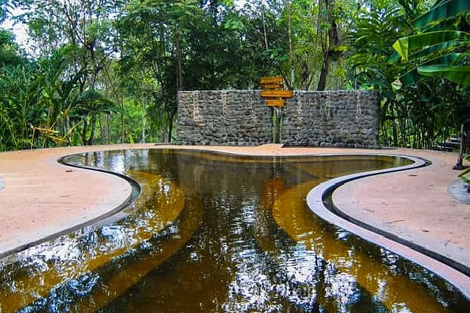
Top 10 Causes of Brown Pool Water

Help! My pool water is clear brown.

Brown pool water is usually due to metals, organic contaminants, or imbalances in the pool’s chemistry. Clear brown water indicates oxidized iron is in the swimming pool. Cloudy brown water indicates organics are also present in pool water.

Here are the top 10 causes:

  1. High Iron Content: Iron in the water often comes from well water, corroded pipes, saltwater systems, bricks, stones, pavers, and pool screens or cages. When chlorine is added to the pool, iron oxidizes, turning the water clear brown or rust colored. If the pH goes up too high, you will get surface staining. Solution: Use Mega Maintain and a CuLator Ultra 4.0.
  2. High Manganese Levels: Manganese in the water, also found in well water or through pipe corrosion, can oxidize and give a brownish or black tint. Solution: Use Mega Maintain and a CuLator Ultra 4.0.
  3. Oxidation: Metals in pool equipment can “dissolve” due to low pH, especially iron, copper, and manganese, which discolor the water and can stain pool surfaces. Solution: Use Mega Maintain and a CuLator Ultra 4.0.
  4. Algae Growth: Certain types of algae, especially when dying or being treated, can turn pool water brown or murky. Solution: Increase your chlorine level. If algae continue, use a copper-based algaecide.
  5. Debris and Organic Material: Leaves, soil, or organic debris can decompose in the pool, giving the water a brown tint and affecting the pH and chlorine levels. Solution: Add more chlorine.
  6. High Total Dissolved Solids (TDS): Excessive minerals and salts in the water can cause discoloration and murkiness if TDS levels become too high. Solution: Drain some pool water and replace it with fresh water.
  7. Low Chlorine Levels: Insufficient chlorine allows organic material to thrive, often leading to water discoloration or cloudiness. Solution: Add more chlorine.
  8. Incorrect pH Levels: Low or high pH can interfere with chlorine’s effectiveness, leading to discoloration from unbalanced water chemistry. Solution: Get pH within range of 7.2-7.6.
  9. Faulty Filter System: A clogged or broken filter can fail to remove organic particles and metals, leading to murky or brown water. Solution: Clean filter or replace with new filter.
  10. Old, Stale Water: If pool water has not been replaced or refreshed in a long time, contaminants and dissolved minerals can accumulate, leading to discoloration. Solution: remove some swimming pool water and replace it with fresh water.

Proper water testing and regular maintenance are key to identifying and addressing the root cause, especially by checking metal levels, pH, and filtration efficiency.

If your brown water is caused by iron, a simple solution is to use https://culator.com/product/mega-maintain-metal-stain-scale-control-sequestering-agent/Mega Maintain Sequester with a CuLator Ultra 4.0 to remove all the ionized metals therefore preventing pool surface stains and water discoloration.


If your brown water is caused by organics, increase your chlorine level, or add algaecide.

Happy Customers Make Us Happy!

Here is an email from a happy CuLator customer on 05/08/19:

Lynne,

Wow this is a fast response . Just what I needed . I love your products by the way . The CuLator is the only thing that has worked for me . I saw David M. had also called me back.

Tell him thank you also

I will continue to be a loyal customer of your products

Thanks again

Paul C.

We love customers like Paul!  Thank you for sharing your comments!

Kids Hair Turned Green From Pool Water

Here is a recent question we received that I wanted to share:

I have a question regarding the Metal Eliminator. We have copper in our pool (about 2.0) no staining or water changing color… just the kids hair is getting a green tint. Do we have to use the Metal Sequester first (I did use metal free at the beginning of the season)? Or can I just get the CuLator Metal Eliminator and put it in my pump basket. Much Appreciated!!

K.D. California

Here is the response:

K.D.

Copper will definitely turn your kids hair green.  No, you don’t have to use the Metal Sequester first, but rather use it at the same time with the CuLator Metal Eliminator Ultra 4.0 ( in your pump basket) for best results.  All metal sequestering agents have a limited life span.  Usually about three to four weeks; so, the best way to deal with stain-causing metals is to get them out of the water.  CuLator is the only product that gets the metal out of the swimming pool water.

Thanks!

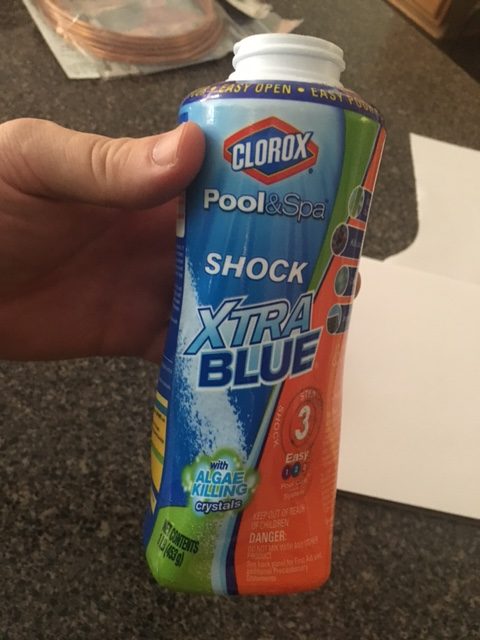
Clorox Xtra Blue Shock With Algae Killing Crystals

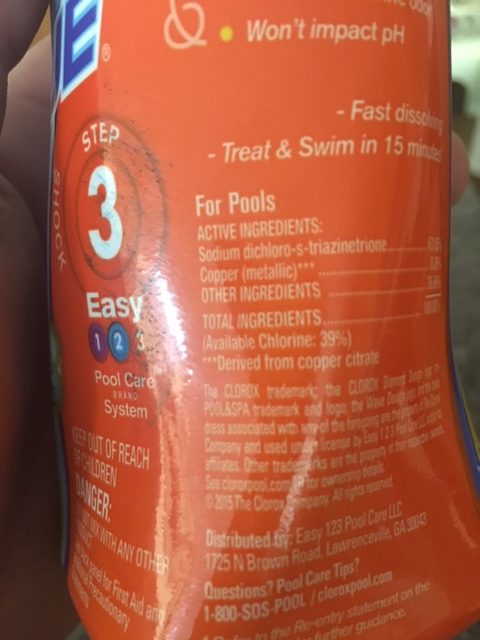
We have had calls about using Clorox Xtra Blue Shock with algae killing crystals.  Please note that this product is using copper as the “algae killing crystals”.  Copper is a great killer of algae, but also creates problems like pool water turning colors and  swimming pool staining.

Clorox Xtra Blue Shock  Clorox Xtra Blue Shock Contents

Always read the label to see what chemicals you are adding to your pool water.

If you do use this product, then you will definitely need to use a CuLator PowerPak 1.0 to eliminate the extra metals.


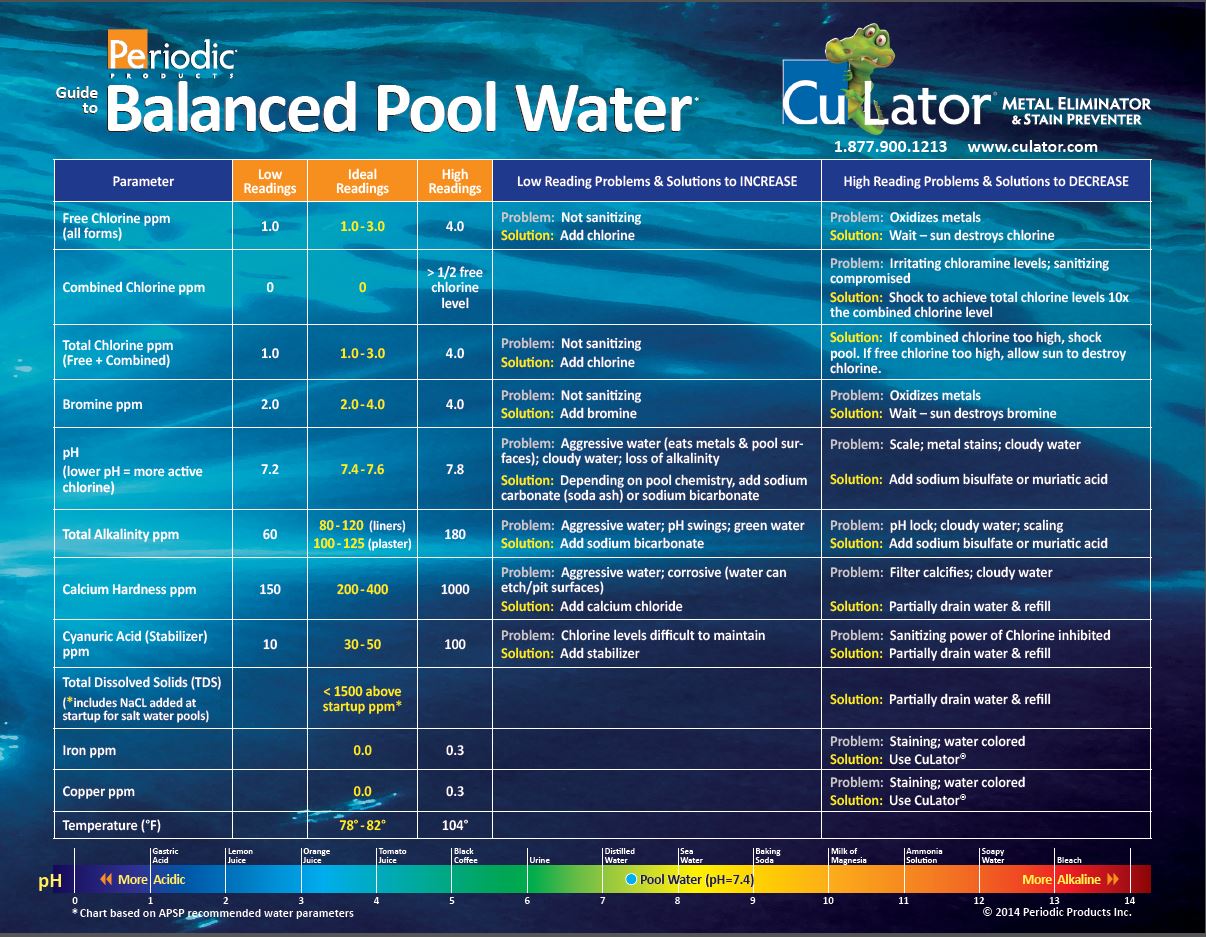
Balanced Pool Water Guide

Guide to Balanced Pool Water

We have many questions about balancing pool water.  Each pool is a little bit different, but most pools will have few problems IF you keep the water balanced.

Use our Guide to Balanced Pool Water which you should print off and keep with your pool records.  This is a general guide set up to make balancing your pool water a little more easy.

When balancing the pool chemistry, it is best to always go to the low end of the ideal settings.  An example is if the range for Total Alkalinity is 100-125, then try for 100.  In the case of the pool water chemistry, less is best.


Guide to Balanced Pool Water